
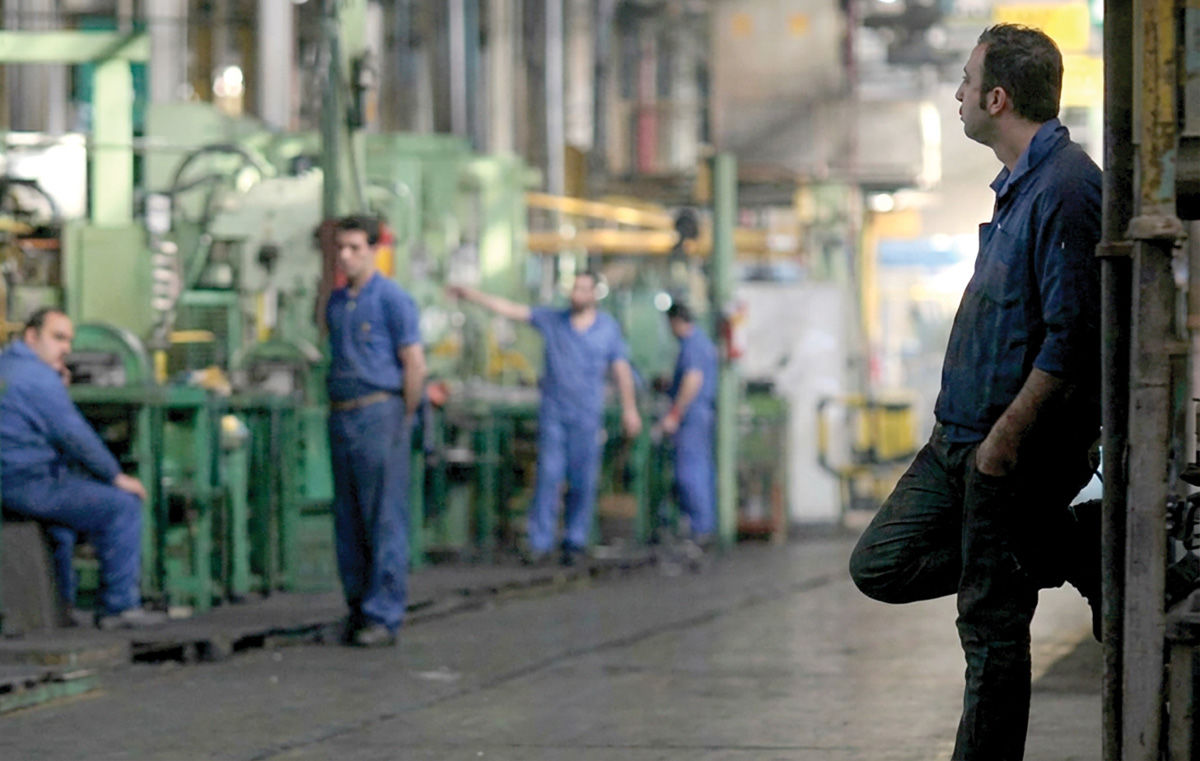
Small and medium-sized enterprises (SMEs) form the backbone of Iran’s industrial sector and account for a large share of employment. Yet recent evidence suggests these firms are under growing strain, with many forced to operate far below capacity due to financial, structural and policy-related pressures.
Analysts warn that unless corrective measures are adopted, today’s capacity cuts could translate into widespread shutdowns and rising unemployment across industrial towns.
In recent months, production behavior in Iran’s industrial estates has shifted noticeably. Rather than outright closures, many manufacturers have responded to worsening conditions by scaling back output, limiting production lines and suspending expansion plans.
This adjustment reflects a combination of falling demand, liquidity shortages, difficulties in sourcing raw materials and recurring energy constraints.
Persistent currency volatility and limited access to working capital have further undermined firms’ ability to plan, turning production into a high-risk decision—particularly for smaller units with fewer financial buffers.
According to the latest report by the Iran Small Industries and Industrial Parks Organization, the crisis facing industrial estates has deepened this year, posing risks to supply chains, employment and economic growth. In some provinces, nearly half of the manufacturing units have either halted operations or sharply reduced activity.
The report identifies liquidity shortages as the leading cause of inactivity, accounting for more than half of non-operational factories nationwide, followed by weak demand, internal disputes among partners, tax pressures, infrastructure problems and outdated machinery.
Technological obsolescence plays an above-average role in several provinces, underscoring the cumulative effect of underinvestment.
Industry representatives stress that reduced capacity is more damaging than temporary closures. Many factories that once operated near full capacity are now running at only 40–50%, placing them on a path of gradual erosion.
Survival Strategy
Rising input costs, unstable raw material prices and shrinking markets have squeezed margins, while tight credit conditions have deprived producers of essential working capital. Under such circumstances, scaling back output becomes a survival strategy rather than a choice.
The slowdown has affected a broad range of industries, though producers of essential consumer goods have been relatively more resilient. By contrast, sectors linked to discretionary spending—such as metals, home appliances, cooling and ventilation systems, interior decoration and construction-related industries—have borne the brunt of the downturn. Given the construction sector’s extensive backward linkages, its stagnation has had a domino effect across numerous manufacturing branches.
Estimates from Iran Chamber of Commerce officials suggest that 16–20% of industrial units in estates nationwide are inactive or semi-active, impacting more than 10,000 factories across all provinces.
Food processing, agriculture-related industries, steel, rolling mills and small metal and chemical workshops are among the hardest hit.
Structural factors dominate: high inflation, sanctions-related constraints, banking restrictions, raw material shortages and aging equipment have collectively pushed many firms to the brink.
Energy disruptions have compounded these challenges. Frequent electricity and gas outages have imposed heavy daily losses, reinforcing concerns about “deindustrialization” and prompting some businesses to shift capital toward imports or non-productive services.
At the same time, restrictive monetary and foreign exchange policies, coupled with sharp currency swings, have increased uncertainty and costs, particularly for smaller producers.
Looking ahead, analysts see limited room for optimism without substantive reforms. Stabilizing the macroeconomic environment, improving access to finance, addressing energy bottlenecks and incorporating private-sector input into policymaking are widely viewed as prerequisites for recovery. Without such measures, SMEs—the core of Iran’s industrial base—risk sliding from partial activity into permanent closure, with far-reaching consequences for employment and growth.