
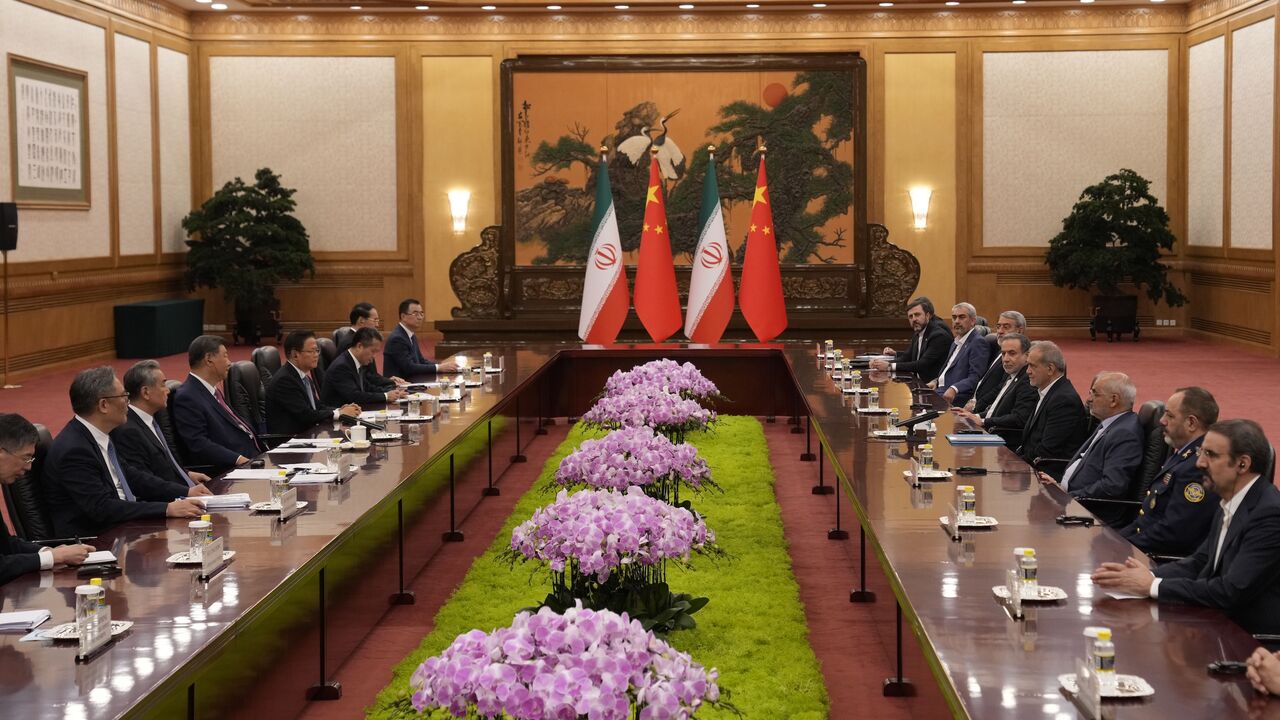
For years, Tehran and Beijing have described their ties as a strategic partnership. Yet trade, investment and energy data suggest a relationship that is far from balanced. China has become a crucial economic partner for Iran, while Iran occupies only a limited place in China’s global economic strategy. The numbers show that although Beijing values access to discounted Iranian energy, its broader commercial interests lie elsewhere, particularly in larger and more stable markets across the Persian Gulf.
China’s economic priorities have increasingly been shaped by its strategic competition with the United States. Securing energy supplies, expanding industrial capacity and diversifying supply chains have become central objectives for Beijing. Within this framework, Iran’s main significance stems from its role as a supplier of oil and other commodities rather than as a major trading partner or investment destination.
Trade statistics illustrate this reality. According to Trade Map data, China imported nearly $1.95 trillion worth of goods in 2013, with Iran accounting for $25.3 billion, or about 1.3% of total imports. By 2025, China’s imports had expanded to more than $2.57 trillion. However, Iran’s share had fallen sharply. Official figures show Chinese imports from Iran at just over $3 billion, equal to only 0.1% of total imports. Even estimates cited by Iranian sources, which place actual exports closer to $14 billion because of sanctions-related underreporting, suggest that Iran accounts for less than 0.5% of China’s import market.
The decline accelerated after the United States withdrew from the nuclear agreement in 2018 and reimposed secondary sanctions on companies dealing with Iran. Since then, many firms have reduced their exposure to the Iranian market, contributing to a steady decline in Iran’s visibility within global trade statistics.
The same trend can be seen in Chinese exports. China’s total exports rose from $2.2 trillion in 2013 to nearly $3.8 trillion in 2025. Yet Iran’s share of those exports remained marginal. Official figures indicate that Chinese exports to Iran fell from about $14 billion in 2023 to $6.9 billion in 2025. Even when unofficial estimates are considered, Iran represents only a small fraction of China’s export market.
Iran’s exports to China remain heavily concentrated in raw materials and semi-processed products. Plastics and plastic products ranked as the largest export category in 2025, followed by iron ore. Copper, steel, zinc and aluminum products also held significant positions. These figures highlight Iran’s continued dependence on commodity exports with relatively low value added.
While Iran plays a limited role in China’s economy, China occupies a much more significant position in Iran’s trade. China was Iran’s second-largest source of imports in the Iranian year ending March 2025, supplying more than a quarter of the country’s imported goods. Chinese products shipped to Iran included vehicles, machinery, electrical equipment, metal products and chemicals.
China is also Iran’s largest export destination. Iranian exports to China reached nearly $14.8 billion during the same period. Natural gas, polymer products, iron ore and copper cathodes were among the leading export items. The trade pattern reflects a familiar imbalance: Iran exports primarily raw materials while importing higher-value manufactured goods.
Fundamental Solution
Economist Mohammad Mehdi Behkish believes sanctions have been the key factor behind China’s growing importance to Iran. “Over the past 20 years, sanctions have effectively strengthened trade relations between Iran and China,” he said. According to Behkish, Chinese buyers became critical customers for Iranian oil after many other markets were closed off by sanctions.
However, he argues that dependence on China has not translated into access to advanced technology. “China is a leader in producing modern, high-quality goods that meet global standards, but in practice Iran does not have access to many of these products,” he said. He added that sanctions and domestic regulations often push Iranian importers toward cheaper and lower-quality alternatives.
Behkish also emphasized the cost of economic isolation. “Lifting sanctions and diversifying trading partners is the fundamental solution for maximizing economic benefits,” he said, arguing that Iran pays more for imports and receives less for exports under sanctions.
The asymmetry is even clearer when viewed through a geopolitical lens. International relations scholar Gholamreza Haddad argues that Iran serves a limited but useful role in China’s broader strategic calculations. “China has access to a wide range of energy suppliers, but sanctioned Iranian oil is cheaper,” he said. Discounted energy allows Beijing to secure resources at lower cost while maintaining flexibility in its foreign policy.
Haddad also contends that China does not regard Iran as a true strategic ally. He points to Chinese investment patterns across the Middle East, where countries such as Saudi Arabia, Iraq and the UAE have attracted far larger volumes of Chinese capital than Iran. Despite repeated references to the 25-year cooperation agreement between Tehran and Beijing, Chinese investment in Iran has remained relatively limited.
“If Iran were truly considered an ally by China, the figures would tell a different story,” Haddad said. He added that Beijing’s reluctance to undertake major investments in Iran may reflect concerns about sanctions risks and uncertainty surrounding the country’s medium-term political and economic outlook.
Ultimately, the numbers reveal a relationship defined by unequal dependence. China remains indispensable to Iran’s trade and energy sectors, but Iran represents only a small component of China’s global economic strategy. As long as sanctions persist and Beijing enjoys broader opportunities elsewhere in the region, the partnership is likely to remain driven by economic pragmatism rather than strategic commitment.