
A preliminary memorandum of understanding between Iran and the United States to halt military confrontation and begin a 60-day negotiating process has once again placed Iran’s oil industry at the center of global energy markets. After months of heightened tensions, export disruptions and geopolitical uncertainty, attention is now focused on negotiations that could determine the future of Iran’s nuclear program, oil sanctions and financial restrictions.
Although easing tensions and improving shipping conditions have allowed part of Iran’s accumulated crude oil to reach international markets, analysts caution that the recent increase in exports should not be mistaken for a lasting recovery. They argue that the coming weeks will be the real test, as the outcome of negotiations will determine whether the current political understanding evolves into a durable agreement that removes banking, insurance, shipping and trade restrictions.
The challenge extends far beyond export volumes. Iran also needs reliable access to oil revenues, the international financial system and lower transaction costs while encouraging the return of official buyers. Recent export gains have improved market sentiment, but they remain insufficient to judge the long-term outlook. The negotiations will ultimately determine whether Iran’s oil industry is entering a genuine recovery or remaining constrained by political uncertainty.
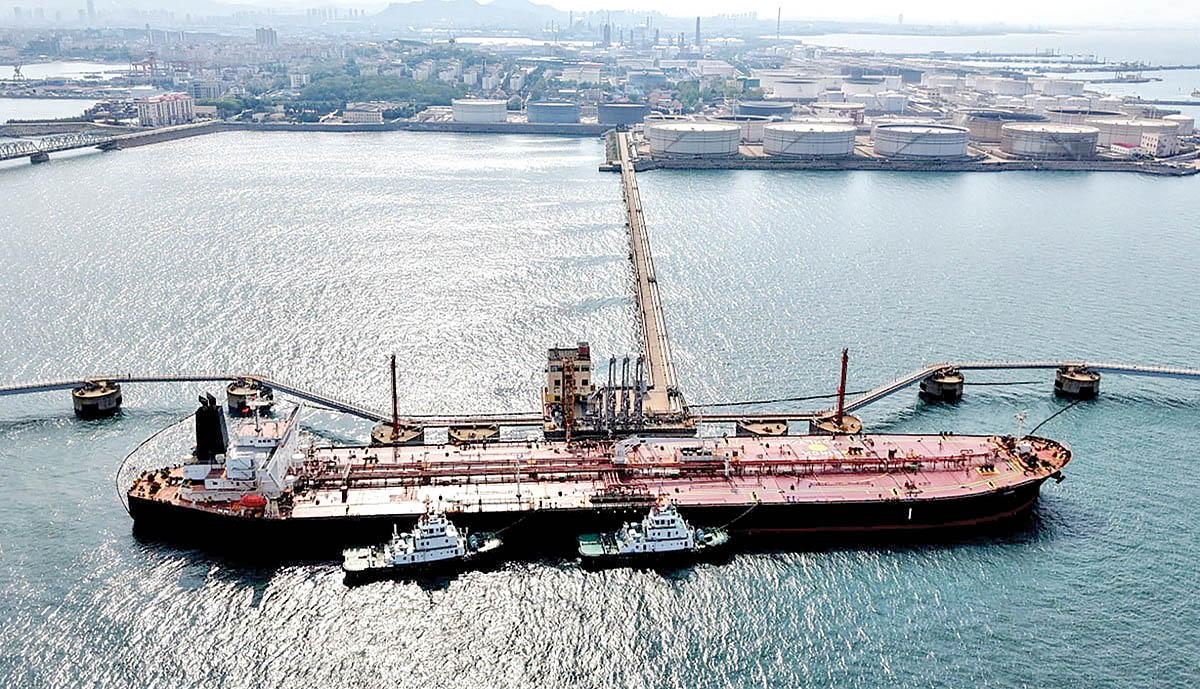
According to oil and energy analyst Masoud Dashti-Derakhshan, the most significant development since the memorandum has been the release of crude oil that had accumulated during the conflict. "Large volumes of Iranian oil had been stored in coastal facilities and floating storage units because of transport restrictions," he said. "With shipping routes gradually reopening, these cargoes are once again reaching export markets, including through ship-to-ship transfers in Southeast Asia."
He explained that the Strait of Hormuz crisis had significantly reduced the industry's operational capacity. Delays in tanker movements, extensive use of floating storage and full onshore tanks forced production cuts that some estimates placed at around 600,000 barrels per day. "As exports resume, production can gradually return to pre-crisis levels," he noted.
The Real Test
However, Dashti-Derakhshan stressed that the greatest uncertainty lies ahead. "The current memorandum is only a temporary step," he said. "Its real value depends entirely on whether the 60-day negotiations produce a lasting agreement." He added that Iran's oil outlook should therefore be evaluated under two separate scenarios: continuation of current conditions or a comprehensive settlement leading to substantial sanctions relief.
He also warned of a potential downside risk. According to Dashti-Derakhshan, the interruption of oil-related financial flows during the conflict may have exposed some of the financial networks used to receive export revenues. "If negotiations collapse and sanctions intensify again, some of these channels could face additional restrictions," he said, emphasizing that access to oil revenues is now as important as the physical movement of tankers.
Ali Dehghan-Saei, oil and gas adviser to the presidential office, offered a more cautious assessment. He believes the current memorandum should primarily be viewed as a reduction in tensions rather than sanctions removal. "The most realistic short-term scenario is a gradual increase in exports, not a sudden surge," he said.
According to Dehghan-Saei, lower maritime risks and better insurance conditions may support higher exports, but China and intermediary trading networks will likely remain Iran's main customers until broader restrictions are lifted. "Only genuine easing of banking, insurance and shipping sanctions will allow Iran to sell more oil through official channels, reduce discounts and earn higher revenues from every barrel," he explained.
Important Reality
He also pointed to another important market reality. "Higher exports do not automatically translate into proportionally higher income," he said. "Global oil demand has limited capacity to absorb additional supply, and a rapid increase in Iranian exports could put downward pressure on international prices."
Energy and petrochemical analyst Seyyed Reza Hosseini believes the greatest benefit of sanctions relief would be improved profitability rather than higher export volumes alone. "For years, a significant share of Iran's oil income has been consumed by sanctions-related costs, mandatory discounts, intermediary commissions, unconventional transportation expenses and complicated financial transfers," he said. "Removing these costs would significantly increase the real value of every exported barrel."
Hosseini estimated that without major new investment, Iran could restore production to about 3.5 million barrels per day by reactivating idle wells and drawing down floating storage. With domestic consumption near two million barrels per day, exports could reach approximately 1.5 million barrels daily.
Looking further ahead, he argued that $40-45 billion in investment in shared oil fields, pressure-enhancement projects and reservoir maintenance could raise production capacity to about 4.5 million barrels per day, supporting sustainable exports of roughly 2.5 million barrels. In the longer term, production could approach five million barrels per day if investment and technology continue to flow into the sector.
Hosseini also emphasized expanding petrochemical and refining capacity. Developing around 1.5 million barrels per day of additional petro-refining capacity, he argued, would create greater value from crude oil while reducing Iran's vulnerability to fluctuations in global energy markets.
The current memorandum has already helped release accumulated oil, restore production and reduce operational risks. Yet the future of Iran's oil industry remains closely tied to diplomacy. A lasting agreement could rebuild Iran's position in global energy markets, while failure would leave the sector facing familiar obstacles, including financial restrictions, shipping limitations, heavy export discounts and limited access to oil revenues. For now, diplomacy—not production capacity—will determine the industry's direction.